His Excellency Most Rev. Tomasz Grysa commends Rt. Rev. Sabino Ocan Odoki for nurturing faith, strengthening the Church and bringing hope to refugees
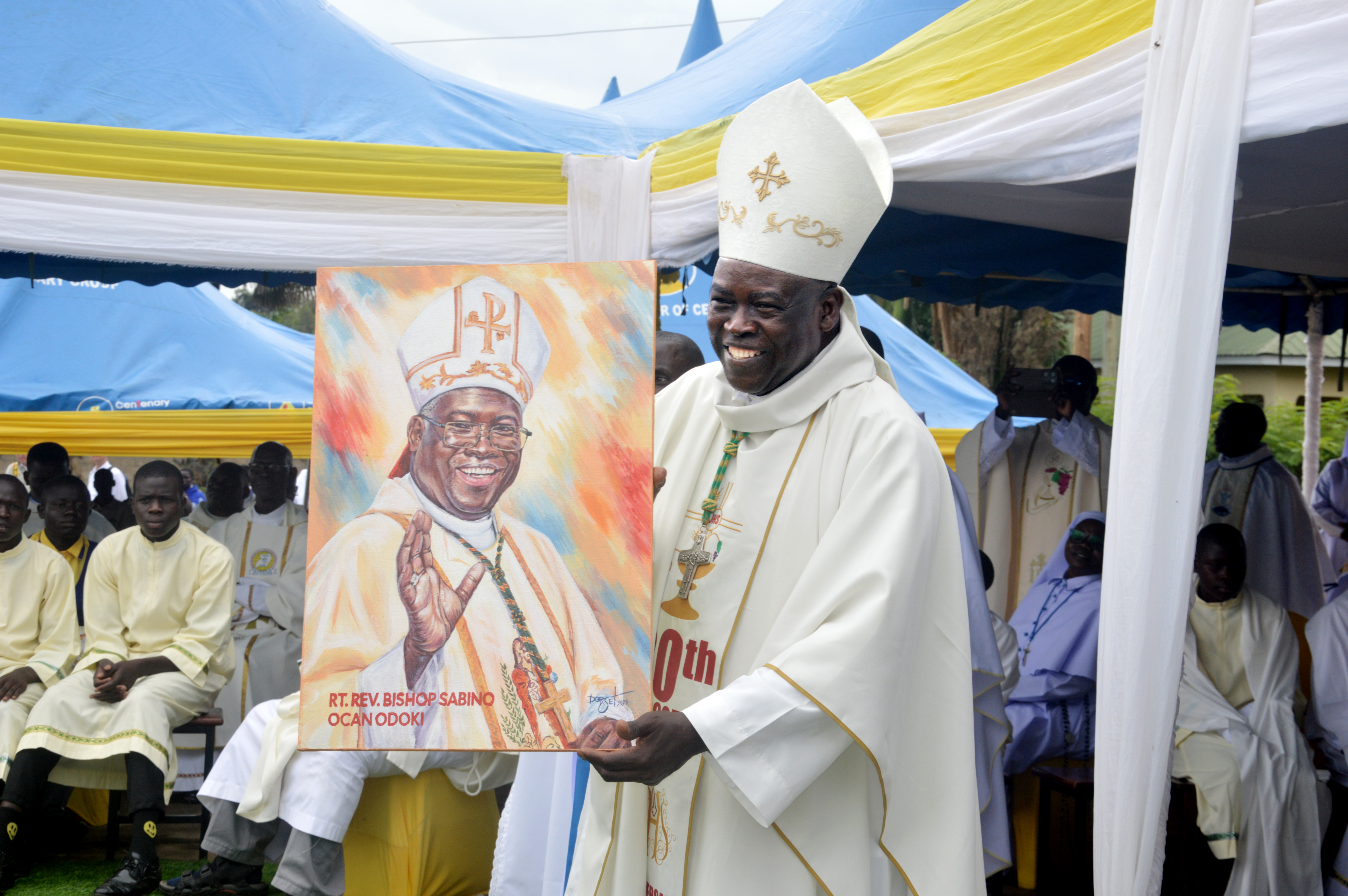
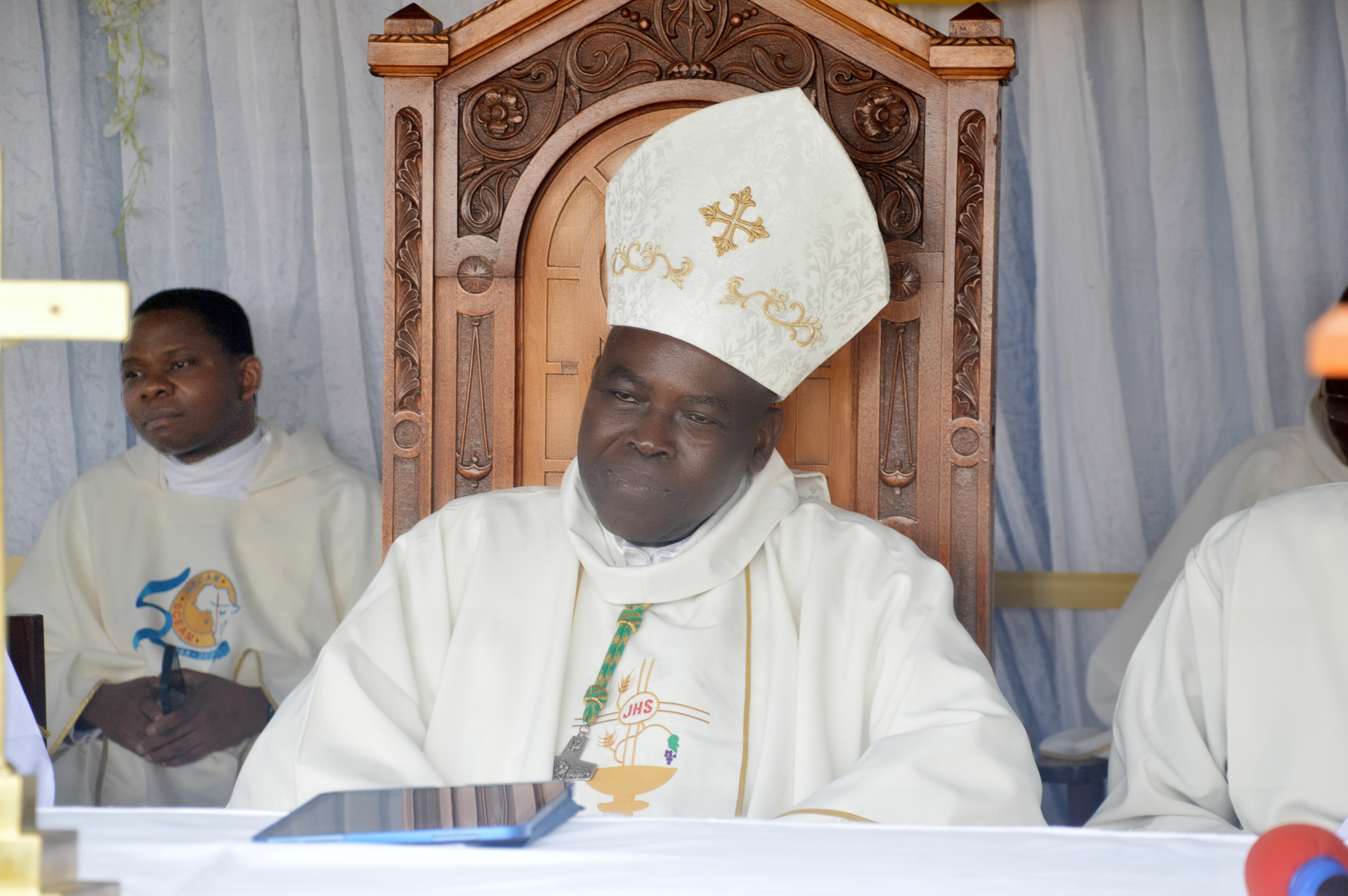
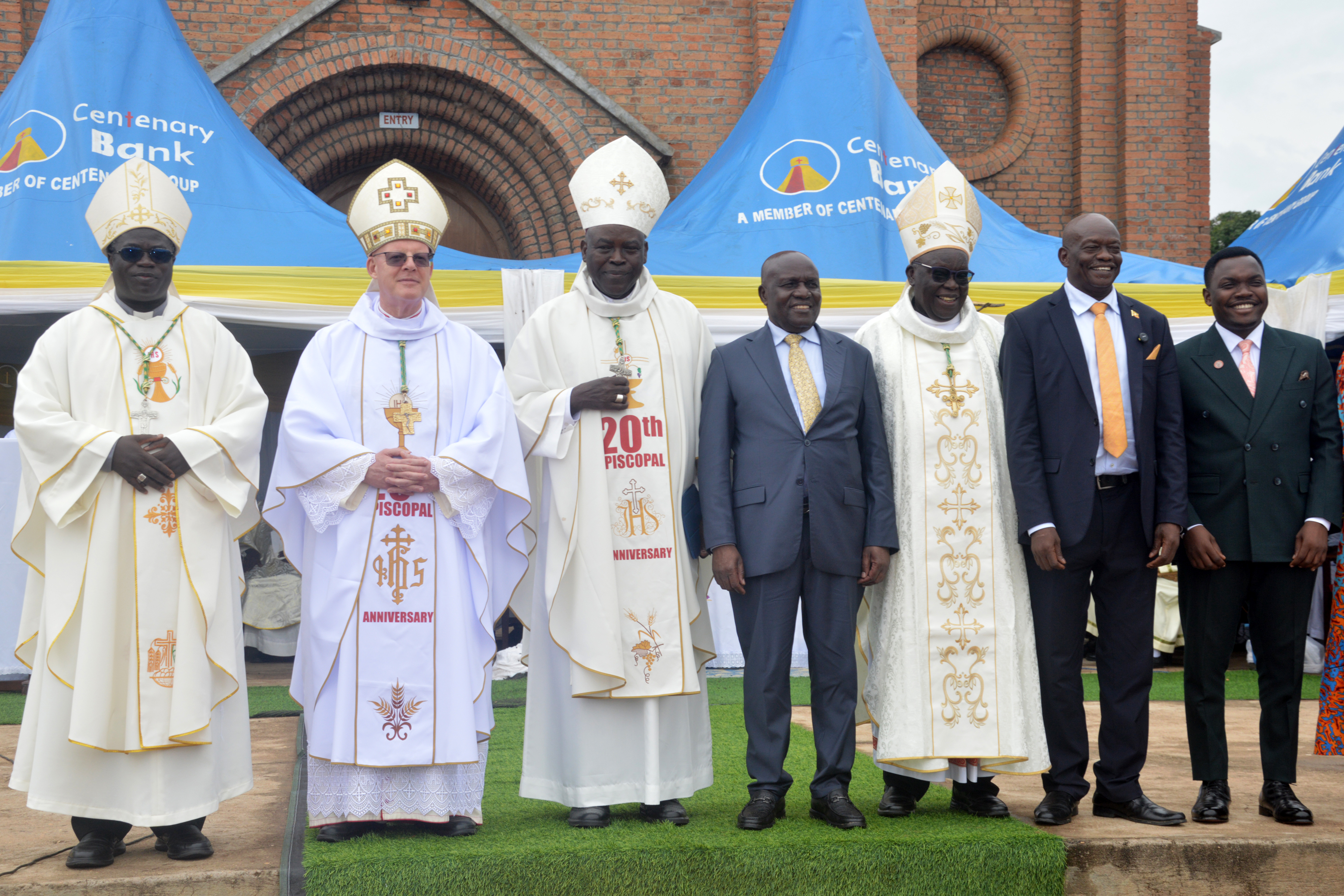
The Diocese of Arua gathered at Sacred Heart of Jesus Ediofe Cathedral to celebrate 20 years of episcopal ministry
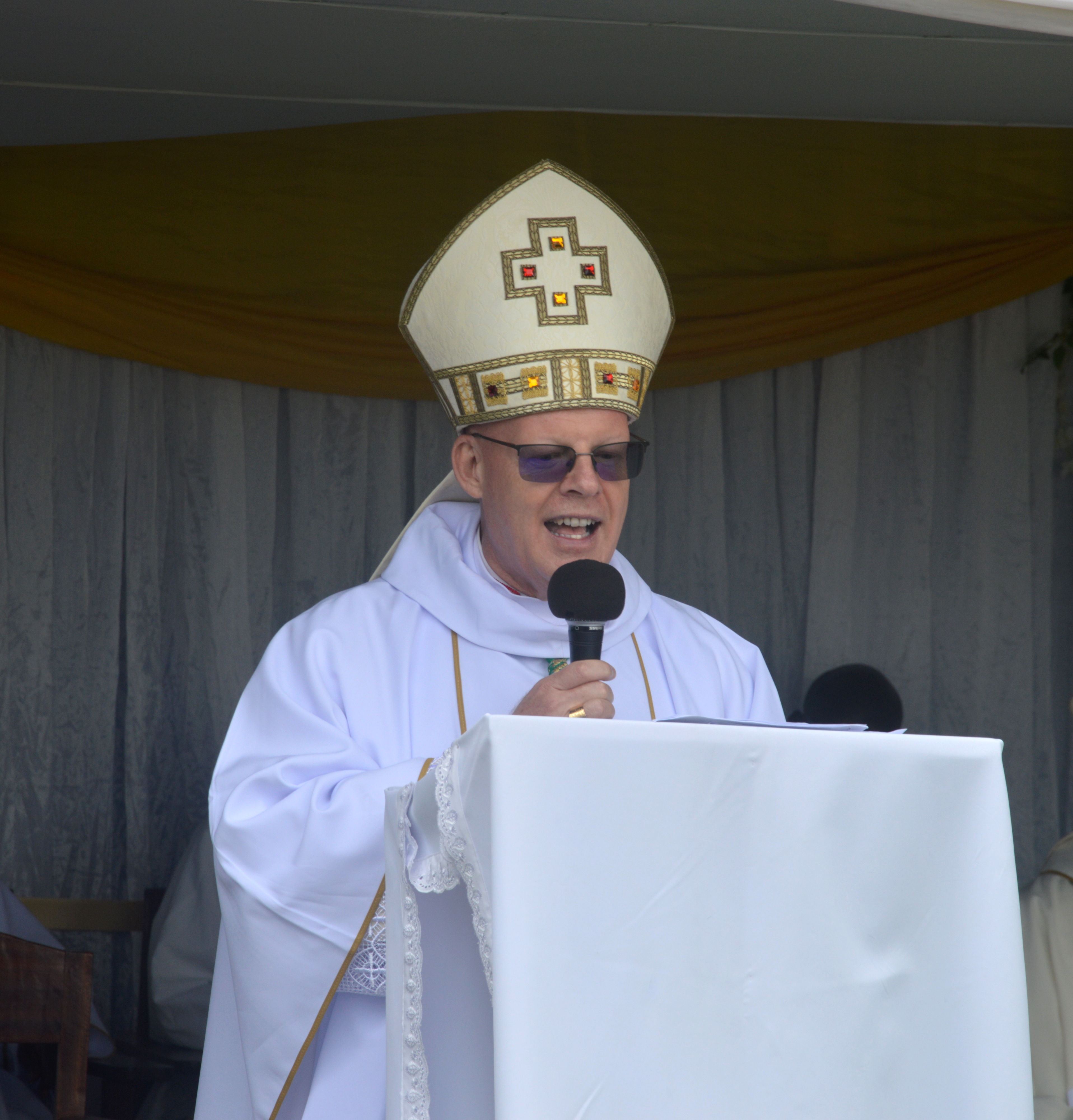
by Rt. Rev. Sabino Ocan Odoki, Bishop of Arua. The Holy Mass was presided over by the Bishop, with His Excellency
Archbishop Tomasz Grysa, the Apostolic Nuncio to Uganda, delivering the homily. The celebration brought together
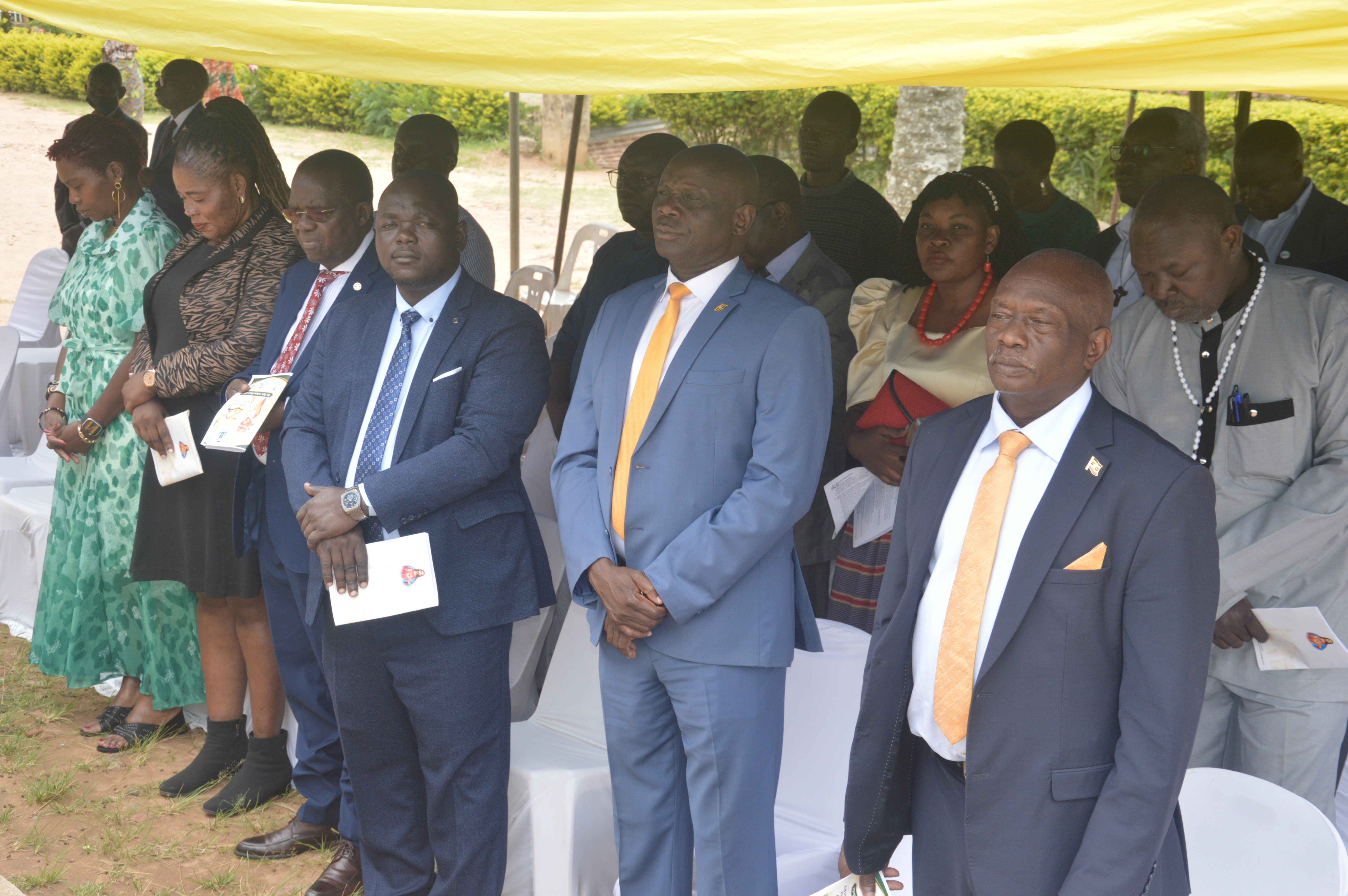
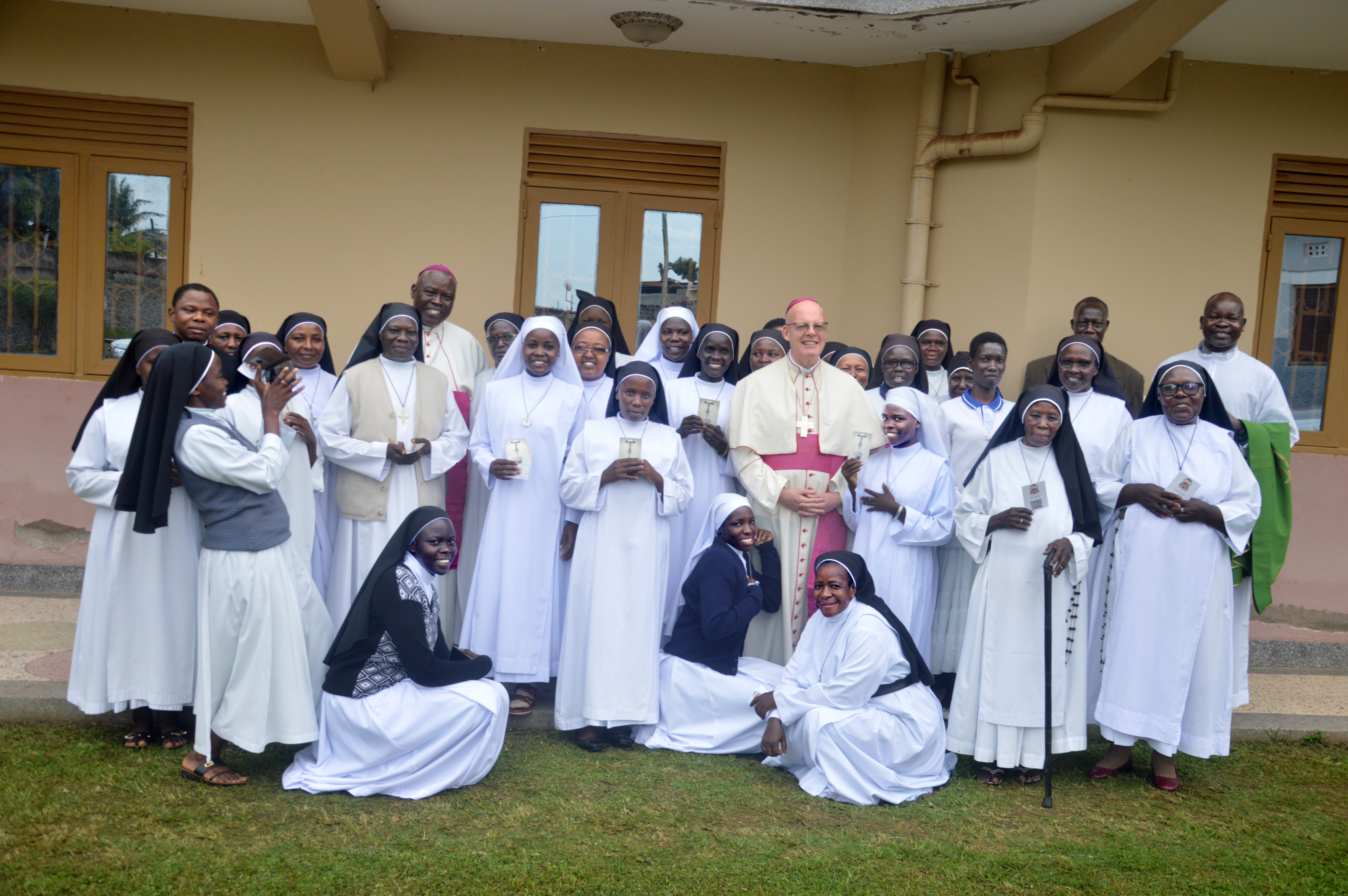
clergy, religious and the faithful to give thanks for the Bishop's two decades of dedicated pastoral service and
leadership.
Reflecting on the responsorial Psalm of the day, "I rejoiced with those who said to me, 'Let us go to
the house of the Lord'" (Psalm 122:1), Archbishop Grysa expressed his joy at visiting Arua for the first
time on such a momentous occasion. He described the celebration as an opportunity to experience firsthand
a Christian community deeply rooted in the love of Christ.
The Rt.Rev. Sabino Ocan Odoki was consecrated to the episcopacy on 21st October 2006, through the laying on of hands by
Archbishop John Baptist Odama, the principal consecrator, assisted by Emmanuel Cardinal Wamala, Archbishop Emeritus
of Kampala, and Archbishop Christophe Pierre, the Apostolic Nuncio to Uganda at the time, as co-consecrators. His
episcopal ministry has been guided by the motto "Rooted in Christ's Love," which, as the Apostolic Nuncio observed,
captures the essence of his pastoral mission over the past 20 years.
Drawing on the teachings of His Holiness Pope Leo XIV, particularly his emphasis on the "liturgy of littleness,"
Archbishop Grysa called on the faithful to embrace humble service, active love and shared responsibility as members
of the family of God.
He emphasised that the mission of the Church cannot rest solely on the shoulders of bishops and priests. Rather,
all the faithful, particularly young people, are called to participate actively in evangelisation and to bring the
message of Christ into the modern world.
Reflecting on the first reading from St. Paul, the Nuncio recalled that Christ gives different gifts to the Church,
appointing some as apostles, others as pastors, teachers and evangelists, to equip the faithful for the work
of ministry.
He explained that the primary responsibility of a bishop goes beyond administration and management. It is
fundamentally about nurturing the flock, building spiritual maturity and equipping the faithful to fulfil
their respective callings within the Church.
Referencing Pope Leo XIV's address to newly appointed bishops from across the five continents, Archbishop
Grysa stressed that no bishop walks alone. Episcopal ministry is a demanding vocation that requires closeness
to God, fraternity with fellow bishops and genuine communion with the people entrusted to one's care.
He therefore encouraged shepherds to move beyond the confines of their offices and cultivate a ministry
characterised by personal presence, pastoral closeness and meaningful engagement with their communities.
Turning to Psalm 122, the Nuncio reflected on Jerusalem as a city built in compact unity, where the tribes
of the Lord gathered to worship together. He challenged the Diocese of Arua to embody the same spirit of
communion, becoming a beacon of unity, faith and hope in the West Nile region.
He observed that, over the past two decades, Bishop Sabino has contributed to building up the Body of
Christ through pastoral outreach, spiritual formation, the ordination of priests and deacons, and the
establishment of new parishes to bring the Gospel and the sacraments closer to the people.
Archbishop Grysa noted that the Bishop's ministry has not been a solitary journey. Rather, he has sought
to equip the faithful for their shared mission, enabling the entire diocese to journey together towards the
Lord.
In reflecting on the Gospel, Archbishop Grysa drew attention to the parable of the barren fig tree (Luke 13:6-9).
When the owner wanted to cut down the tree because it had failed to bear fruit, the gardener pleaded for more time
to cultivate the ground around it in the hope that it would eventually become fruitful.
The Nuncio presented this as a powerful image of episcopal ministry, which demands patience, mercy and
diligent cultivation of human souls. A shepherd, he explained, must never be quick to abandon those who
appear unproductive or lost, but must continue nurturing them with love, compassion and the hope of
transformation.
Connecting this message to Pope Leo XIV's teaching on the "liturgy of littleness," he reminded the
faithful that God often reveals Himself in humble and easily overlooked circumstances. The Church
must therefore go out to encounter people where they are, particularly those who are vulnerable,
forgotten or in need of spiritual renewal.
Archbishop Grysa commended Bishop Sabino for his pastoral commitment to refugees in the West
Nile region, recognising the efforts of the Bishop, priests and religious in establishing chapels,
schools and pastoral structures within refugee-hosting communities.
He noted that through these initiatives, the Church has continued to bring Christ's presence, the
sacraments and the message of hope closer to displaced families and vulnerable communities. The
Nuncio acknowledged the importance of transforming places marked by loss and uncertainty into spaces
of faith, dignity and hope.
He further highlighted the importance of responsible stewardship, transparency and financial accountability
in sustaining the Church's mission, supporting the poor and promoting greater self-reliance within the diocese.
He observed that when a shepherd is firmly rooted in Christ, his stewardship becomes visible through responsible
leadership, service to others and the faithful management of the resources entrusted to the Church.